Why site speed quietly wins you more business
June 12, 2026 · Northlight Studio
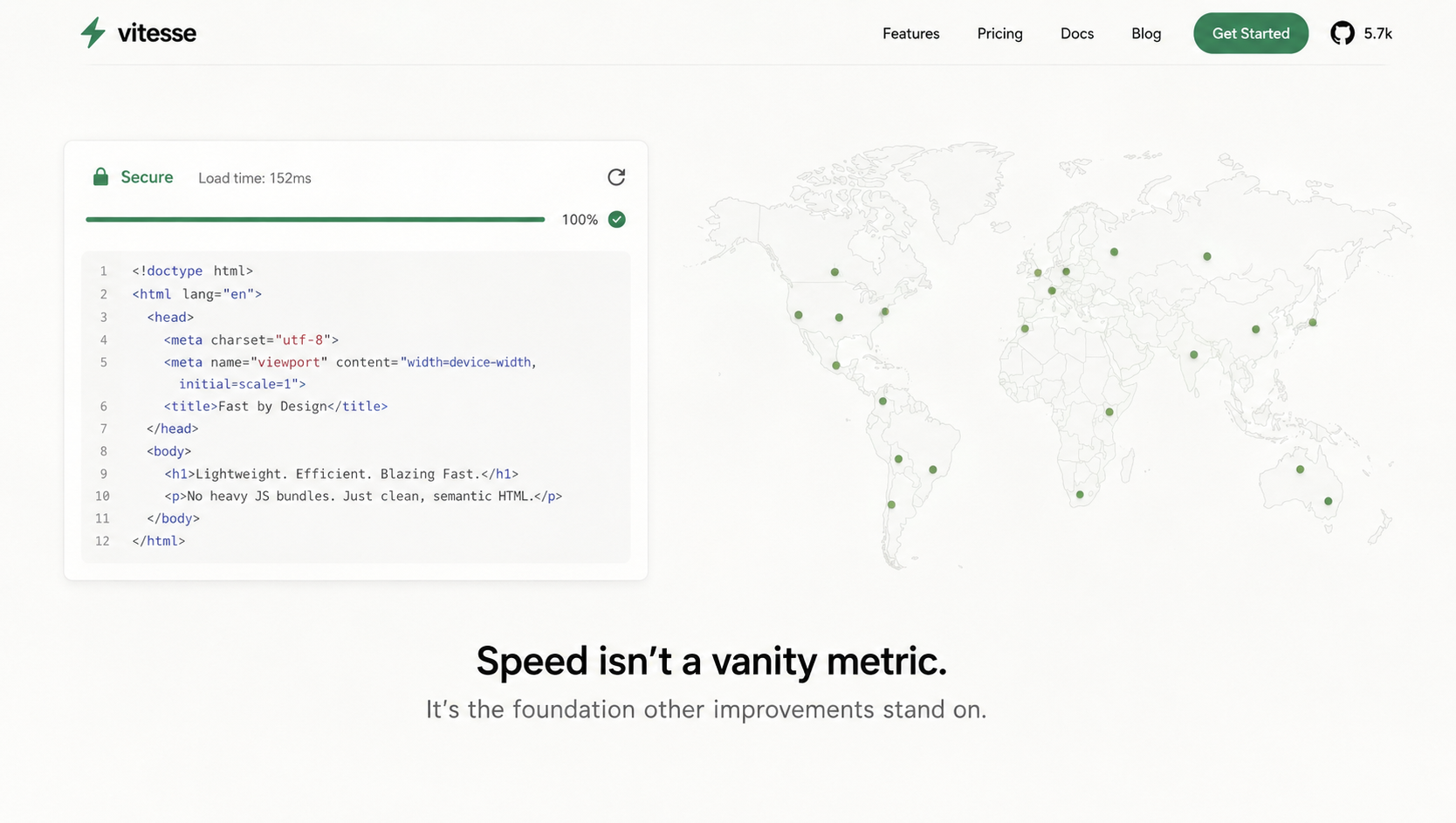
Speed isn't a vanity metric. It's the difference between a visitor who reads your pitch and one who's gone before the page even paints. And unlike most improvements, speed keeps paying you back — every visitor, every day, forever.
The numbers that actually matter
- A one-second delay can cut conversions by around 7%.
- Google uses Core Web Vitals — real speed measurements — as a ranking signal.
- Link-preview scrapers (LinkedIn, WhatsApp, Slack) give up on slow or JavaScript-only pages, so your shared links show up blank.
None of these are dramatic on their own. Together, they quietly bleed away business you never even knew you were losing.
How I keep sites under a second
1. Ship HTML, not a framework. The fastest page is one where the content is already in the HTML when it arrives — no waiting for scripts to run before anything appears. I build content sites so the words and layout are there instantly.
2. Zero JavaScript by default. Most pages don't need much interactivity. I only load JavaScript for the specific pieces that need it — a contact form, a menu — and leave the rest as plain, fast HTML.
3. Serve from the edge. Static pages can be cached on servers physically close to your visitor, so a customer in Sydney and one in London both get an instant response.
4. Right-size everything. Images in modern formats, fonts that don't block rendering, and no bloated third-party scripts tracking things you'll never look at.
Why it compounds
Here's the part most people miss. A faster site ranks a little higher, which brings more visitors. More of those visitors stay, because the page didn't make them wait. More of the ones who stay convert, because friction is gone. And a higher-ranking, higher- converting page attracts links and shares, which push it higher still.
Speed isn't one improvement. It's the foundation the other improvements stand on. Get it right once and it works for you quietly, in the background, for as long as the site is live.
If your current site takes more than two seconds to load on a phone, that's the first thing I'd fix — and usually the cheapest big win available.